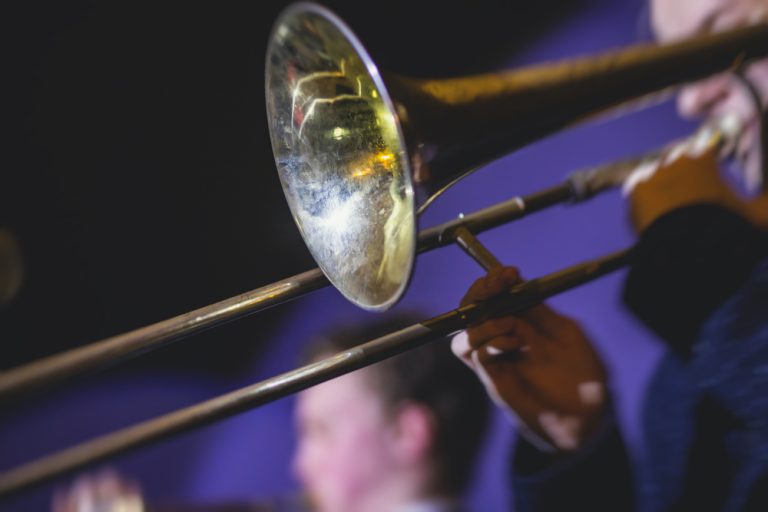
1. History
Bass trombone players shaped the early development of low-brass music through ceremonial, religious, and court ensembles. Their influence expanded during the Baroque and Classical periods as composers demanded deeper textures and stronger harmonic grounding.
Over time, improvements in metallurgy and instrument design supported powerful projection. These changes helped define the modern orchestral low-brass section.
2. Technique
Bass trombone players rely on controlled airflow, coordinated slide movement, and precise embouchure stability to create a resonant tone. Their mastery also includes managing valve combinations that support lower-register efficiency.
Refined technique enables smooth articulation and consistent sound across wide dynamic ranges. Musicians often build endurance through targeted daily routines.
3. Equipment
Bass trombone players select instruments by comparing bell materials, bore sizes, valve systems, and tuning-slide configurations. These elements influence tonal color, projection, and playing comfort.
Many players experiment with various mouthpieces to optimize response. Customization allows performers to tailor equipment to their stylistic goals.
4. Orchestral role
Bass trombone players strengthen orchestral depth by reinforcing harmony and driving climactic moments. Their lines frequently blend with tuba, bassoons, and low strings to build a unified sonic foundation.
Composers use the instrument to bridge subtle warmth and explosive intensity. The instrument’s adaptability supports both lyrical passages and thunderous accents.
5. Jazz contributions
Bass trombone players introduced a deeper, more robust color to jazz ensembles, especially in big band and studio settings. They enhance rhythmic momentum and support harmonically rich backgrounds.
Arrangers often design powerful shout-section lines that showcase its weighty tone. Jazz solos on the instrument continue to grow in popularity and technical sophistication.
6. Solo repertoire
Bass trombone players now enjoy a growing library of solo works that highlight the instrument’s expressive depth. Concertos, sonatas, and recital pieces explore wide intervals and dramatic contrasts.
Composers continue to expand the repertoire with innovative styles. These additions help performers display technical precision and lyrical artistry.
7. Ensemble versatility
Bass trombone players contribute to orchestras, wind ensembles, film scoring sessions, musical theater pits, and chamber groups. Their broad stylistic flexibility allows seamless transitions between genres.
Strong ensemble listening skills help them balance power with blend. These traits make the instrument essential across diverse performance settings.
8. Practice methods
Bass trombone players develop structured routines that include long tones, articulation drills, valve exercises, and slide coordination patterns. These methods support tone consistency and flexibility.
Musicians often record practice sessions to track their progress. External listening reveals subtle improvements in intonation, color, and clarity.
9. Performance challenges
Bass trombone players face demanding repertoire that requires airflow strength, technical accuracy, and extended endurance. Fast slide movements and complex valve combinations test coordination.
Environmental changes can affect resonance and projection. Successful performers adapt quickly to venue acoustics and temperature variations.
10. Professional pathways
Bass trombone players pursue careers in symphonies, military bands, opera orchestras, jazz ensembles, recording studios, and universities. Many blend performing with teaching and arranging.
Competitiveness in auditions pushes musicians to maintain a high standard. Professional advancement often comes through consistent preparation and artistic growth.
11. Influential figures
Below is a list of twelve iconic artists whose contributions shaped the global evolution of the bass trombone across orchestral, studio, jazz, and contemporary performance traditions.
-
George Roberts – Known as “Mr. Bass Trombone,” he transformed studio and big band sound with unmatched lyrical warmth.
-
Douglas Yeo – His orchestral mastery, pedagogy, and historical research shaped modern brass education.
-
Stefan Schulz – A Berlin Philharmonic standout who expanded the repertoire through significant commissions.
-
Charles Vernon – A Chicago Symphony pillar known for resonance, breathing mastery, and influential teaching.
-
Randall Hawes – Celebrated for expressive nuance and chamber artistry with strong pedagogical impact.
-
Denson Paul Pollard – A Metropolitan Opera force with exceptional endurance and dramatic expressiveness.
-
Bill Reichenbach – A Hollywood studio legend whose sound defines countless iconic film scores.
-
Jeff Reynolds – LA Philharmonic veteran known for orchestral richness and advocacy for trombone ensembles.
-
Ben van Dijk – International soloist whose lyrical recordings shaped global trombone performance.
-
Gerry Pagano – A St. Louis Symphony leader known for clarity, focus, and expressive phrasing.
-
Allen Kline – A New York Philharmonic cornerstone praised for blend, depth, and mentorship.
-
Dave Taylor – A pioneer of contemporary and experimental low-brass techniques and styles.
12. Future trends
Bass trombone players benefit from advancements in acoustics, valve engineering, and digital learning technologies. These innovations support greater efficiency and expressive capability.
As composers explore hybrid genres and multimedia scoring, the instrument’s versatility grows. Future performers will continue pushing technical and stylistic boundaries.
References
- https://www.trombone.net
- https://www.iteaonline.org
- https://www.jazzbooks.com
About the Author